


Communication Skills and Personality Development
This course helps finance professionals improve their communication and professional skills to explain financial concepts clearly, build strong relationships, influence stakeholders, and lead with confidence in the workplace.
Course Modules
- Course Introduction & Participant Needs Assessment
- Understanding Communication Styles (e.g., DISC or MBTI light introduction)
- The Power of Self-Awareness in Communication
- Introduction to Emotional Intelligence (EI)
- The Art of Active & Empathic Listening
- Overcoming Listening Barriers in High-Pressure Environments
- Asking Effective Questions (Open vs. Closed, Probing)
- Non-Verbal Cues: The Unspoken Language
- The Curse of Knowledge: Simplifying Financial Jargon
- Crafting Clear & Concise Emails and Reports
- Data Visualization Principles for Non-Experts
- Mastering Professional Verbal Communication
- Voice Modulation, Pace, Pitch, and Volume
- Eliminating Filler Words and Boosting Articulation
- Impromptu Speaking: The Elevator Pitch & Q&A
- The Psychology of Influence (Cialdini's Principles)
- Building Credibility & Trust
- Understanding Stakeholder Needs & Motivations
- Crafting Persuasive Arguments (Logos, Pathos, Ethos in Finance)
- Fundamentals of Negotiation in Finance
- Preparing for Negotiations (BATNA, ZOPA)
- Common Negotiation Styles & Tactics
- Handling Objections & Closing Deals
- Deep Dive into Emotional Intelligence (Self-Awareness, Self-Regulation, Motivation, Empathy, Social Skills)
- Managing Emotions in High-Stakes Finance Situations
- Building Rapport & Trust with Clients and Colleagues
- The Power of Empathy in Finance
- Defining Executive Presence for Finance Leaders
- Body Language & Posture for Authority and Confidence
- Professional Demeanor & Gravitas
- Professional Etiquette in Meetings, Dining, and Social Functions
- Structuring a Compelling Financial Presentation
- Designing Visually Engaging Slides (Beyond Bullet Points)
- The Art of Storytelling with Data
- Crafting a Strong Opening & Memorable Closing
- Powerful Presentation Delivery Techniques
- Engaging Your Audience & Maintaining Attention
- Masterful Q&A Handling & Managing Challenging Questions
- Managing Presentation Anxiety & Projecting Calm
- Learning Outcome: Deliver presentations with confidence and clarity.
- Frameworks for Difficult Conversations (e.g., "Crucial Conversations" principles)
- Delivering Bad News & Managing Expectations
- Giving & Receiving Constructive Feedback
- Saying "No" Gracefully & Setting Boundaries
- Understanding Conflict Styles
- Strategies for Effective Conflict Resolution
- De-escalation Techniques & Mediator Skills
- Managing Up: Communicating with Senior Leadership
- The Value of Strategic Networking for Finance Professionals
- Crafting Your Professional "Elevator Pitch"
- Initiating & Sustaining Professional Relationships
- Networking Events and Online Presence (LinkedIn)
- Cross-Cultural Communication Nuances
- Defining Your Unique Personal Brand as a Finance Professional
- Authenticity vs. Professional Persona
- Building a Consistent Online and Offline Brand
- Leveraging Your Network for Career Growth
- Communicating Vision & Strategy
- Inspiring & Motivating Teams
- Delegating Effectively & Providing Support
- Communication During Change Management (Finance Context)
- Synthesizing Key Learnings & Personal Growth
- Sustaining Communication & Presence Skills Post-Course
- Developing a Personal Communication Action Plan
What We Teach: Practical Case Studies & Assignments
- Basic Accounting: Understand basic accounting & pass entries based on Practical/US Accounting rules.
- Tally Setup: Create companies, manage data, and backup/restore.
- Voucher Entries: Record transactions for the current financial year in Tally.
- Method of Accounting: Apply accounting principles in Tally.
- Ledger Finalization: Reconcile and finalize ledger balances in Tally.
- Bank Reconciliation: Prepare Bank Reconciliation Statements (BRS) in Tally.
Exam Pattern
In order to complete the course and download the certificate, you will need to complete the course.
Course completion will be considered when you have completed the following:
- Answered all of the Assessments and MCQs that come at random intervals during the course.
- Complete all of the Experiments, Case Studies and Assignments.
- Take the Final test and score at least 50% in it.
Your final marks will be evaluated as follows:
- 20% – Course MCQs
- 20% – Simulation Completion
- 60% – Final MCQ Exam (20 Questions; 30 Minutes)
Once you have completed it all, you will be provided with marks and a ‘Grade’ and you will be able to download the certificate.
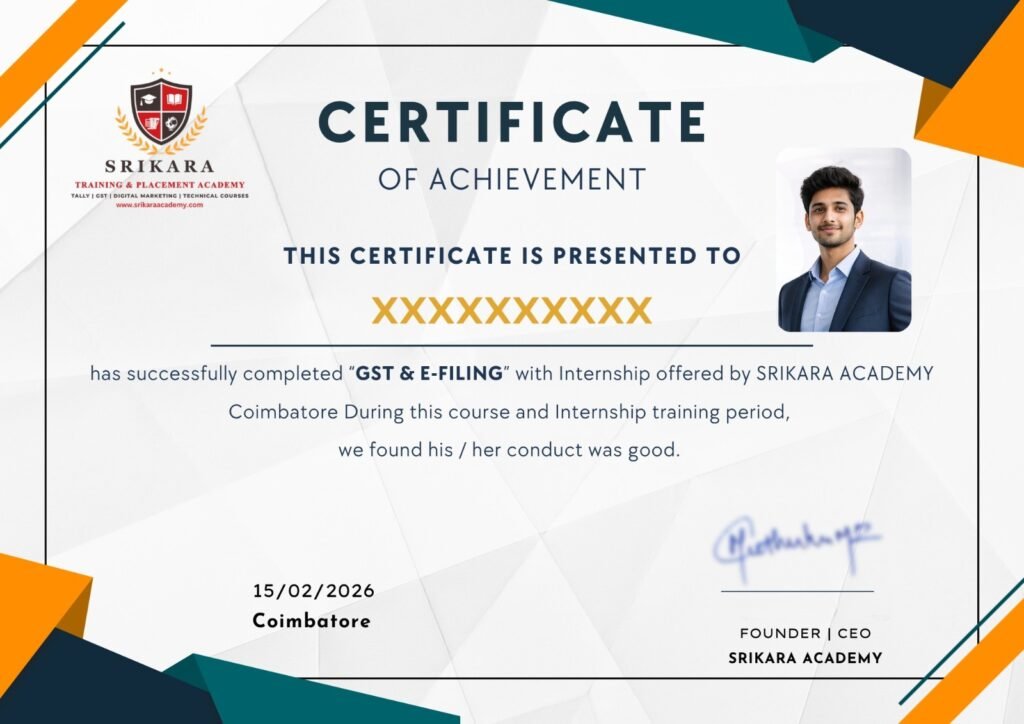
Get Certified in Our Practical Courses
Enhance your skills and boost your career prospects with our comprehensive range of courses. Get certified today!
- Industry-recognized certification upon completion.
- Users can download certificate after completing the final course test.

9 Chapters
18 Case Studies
61 Assessments
10+ Recordings
21 MicroVideos
15 Languages